Francesco Masi
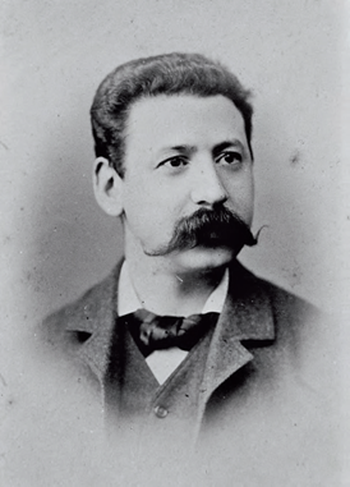
Francesco Masi (Guastalla, 1852 – Bologna, 1944) was a professor of Applied Mechanics at the University of Bologna from 1890 to 1927.
After earning his degree in Civil Engineering from the Royal School of Engineering in Turin in 1875, he quickly launched his academic career, distinguishing himself from the outset for his scientific rigor and dedication to teaching. In 1877, he moved to Bologna, where he joined the newly established Royal School of Engineering as an assistant professor of Hydraulics and Mechanics Applied to Machines. In 1880, he obtained his habilitation in Applied Mechanics, solidifying his position in the national academic landscape. In 1890, he was appointed associate professor at the University of Bologna, and in 1897, he was named full professor of Applied Mechanics, a position he held until his retirement in 1927.
Throughout his career, Masi expanded his teaching activities to other fields, instructing mechanics at the Royal Higher School of Agriculture in Bologna, the Faculty of Industrial Chemistry, and the Aldini Valeriani Technical Institute, thereby making a decisive contribution to technical education in the region. His scientific work focused primarily on the Theory of Mechanisms, a field in which he made significant contributions to the development of the kinematics and dynamics of machines, combining theoretical rigor with engineering applications.
His major works, including the Manual of Applied Kinematics (1883) and The Theory of Mechanisms (1897), served as a benchmark for engineering education, introducing a systematic approach to the study and design of machine components. These works helped spread a modern and practical vision of mechanics in Italy, strongly oriented toward industrial applications and design.
Francesco Masi’s work was pioneering in the search for industrially useful contributions to machine design: in selecting the most suitable mechanisms for performing specific movements, as well as in improving machine efficiency by reducing friction losses. At the University, Masi’s studies helped foster in Italy the practical sense that was often lacking, giving rise —starting with the design of machine components— to their systematic study and, consequently, to what would later become the field of Mechanical Engineering.
In recognition of his long and distinguished scientific and academic career, he was named Professor Emeritus of the University of Bologna in 1931.